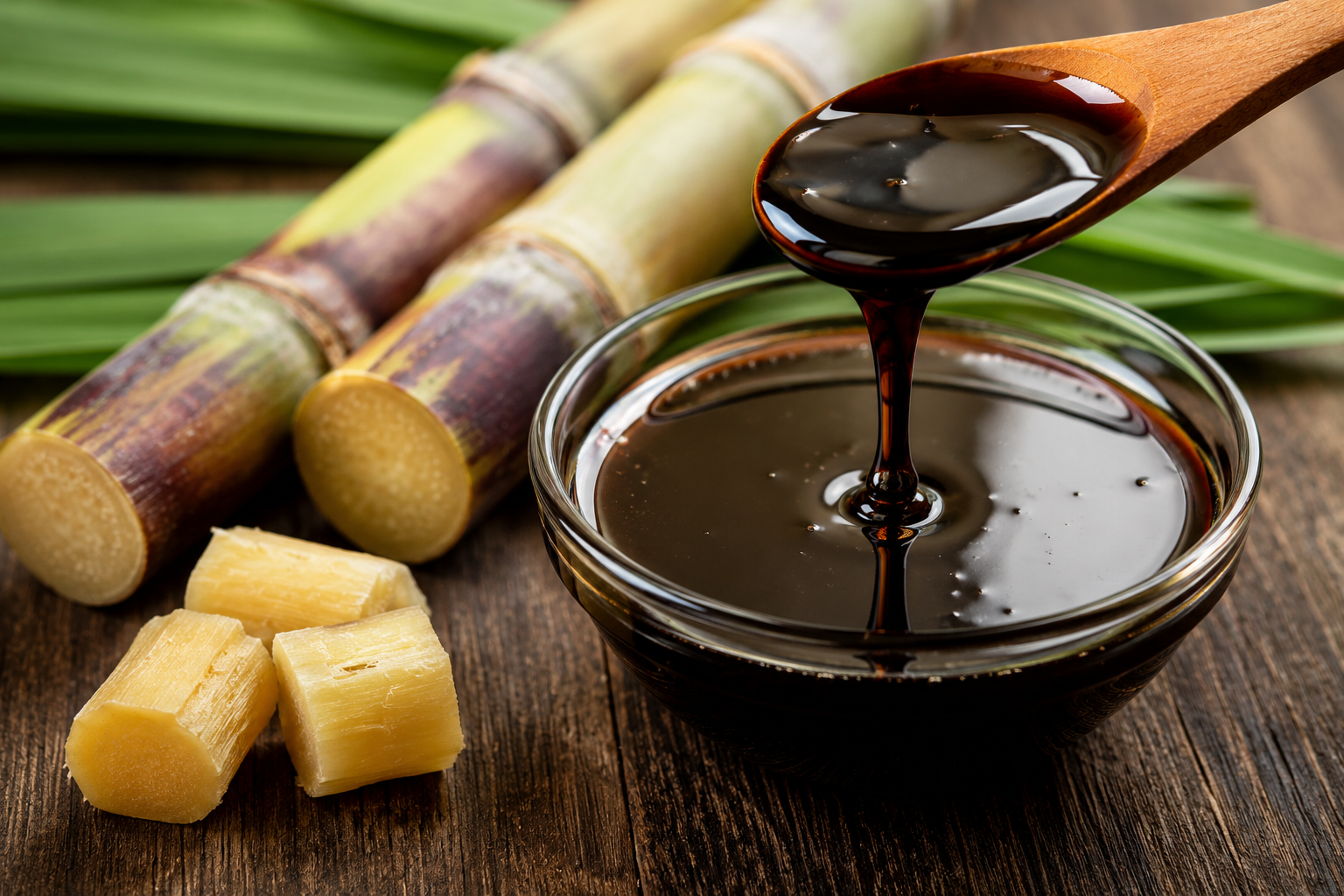
Sugarcane molasses is a thick, dark brown syrup produced during the sugar manufacturing process. After sugar crystals are extracted from sugarcane juice, the remaining liquid becomes increasingly concentrated through evaporation, resulting in molasses. Rich in natural sugars, minerals, and organic compounds, sugarcane molasses has become an important raw material for a wide range of industries around the world.
Due to its nutritional value, high energy content, and cost-effectiveness, sugarcane molasses is widely traded internationally and is considered one of the most versatile by-products of the sugar industry.
Composition of Sugarcane Molasses
The composition of sugarcane molasses may vary depending on the origin of the sugarcane and the production process. In general, it contains:
• Natural sugars (mainly sucrose, glucose, and fructose)
• Water
• Organic acids
• Minerals such as potassium, calcium, magnesium, and iron
• Small amounts of proteins and amino acids
• Vitamins and trace elements
These components make molasses an excellent ingredient for industrial applications requiring natural carbohydrates and nutrients.
Main Applications of Sugarcane Molasses
1. Animal Feed Industry
One of the largest applications of sugarcane molasses is in animal nutrition. It is commonly added to feed formulations to improve palatability, reduce dust, and provide a highly digestible source of energy for livestock such as cattle, sheep, goats, and horses.
2. Fermentation Industry
Sugarcane molasses is an ideal fermentation substrate because of its high sugar content. It is widely used for producing:
• Ethanol
• Baker’s yeast
• Industrial alcohol
• Organic acids
• Enzymes
Its consistent quality and fermentable sugars make it a preferred raw material for many fermentation facilities.
3. Food Industry
In selected food applications, sugarcane molasses is used as a natural sweetener and flavor enhancer. It contributes a rich color, distinctive aroma, and unique taste to various food products and specialty recipes.
4. Tobacco Manufacturing
Molasses is commonly used in flavored tobacco production, particularly for waterpipe (shisha) tobacco. It helps maintain moisture, improves texture, and carries flavoring ingredients while enhancing the overall smoking experience.
5. Biofuel Production
As industries move toward renewable energy solutions, sugarcane molasses has become an increasingly important feedstock for bioethanol production. It supports sustainable energy initiatives by utilizing a valuable agricultural by-product.
Advantages of Sugarcane Molasses
Sugarcane molasses offers several commercial and technical advantages:
• High natural sugar content
• Excellent energy source
• Cost-effective industrial raw material
• Suitable for multiple industries
• Easy to transport in bulk
• Sustainable use of agricultural resources
• Available throughout the year in major producing regions
These benefits have made molasses an essential commodity in international trade.
Quality Considerations
When purchasing sugarcane molasses, buyers should consider several quality parameters, including:
• Brix level
• Total sugar content
• Purity
• Moisture level
• Ash content
• pH value
• Viscosity
• Color
• Absence of contaminants
Reliable suppliers perform regular quality inspections to ensure consistency and compliance with customer specifications.
Packaging and Transportation
Sugarcane molasses is commonly supplied in:
• Bulk tank trucks
• ISO tanks
• Flexitanks
• Drums
• IBC containers
The choice of packaging depends on shipment volume, destination, and customer requirements.
Why Choose a Reliable Supplier?
Working with an experienced supplier ensures consistent quality, reliable logistics, competitive pricing, and timely delivery. Since industrial processes often require stable product specifications, supplier reliability plays a crucial role in maintaining production efficiency.
Professional exporters also provide the necessary documentation, quality certificates, and shipping support for international transactions.
Conclusion
Sugarcane molasses is far more than a by-product of sugar production. It is a valuable natural ingredient that supports industries ranging from animal nutrition and fermentation to food processing, tobacco manufacturing, and renewable energy.
Its versatility, economic value, and broad industrial applications continue to drive strong global demand. Whether purchased for manufacturing, feed production, or export, high-quality sugarcane molasses remains an essential commodity in today’s international market.